
Singapore is a tiny little red dot on the map, but we constantly punch above our weight to try and be the best in the world at things. People come here for the surreal architectural wonders like the alienesque Supertrees of Gardens by the Bay; many are seduced by our plethora of hawker food and award-winning cuisine; others are surprised by the rich multicultural history and way of life we have here.
Unfortunately, Singapore isn’t a cheap place to visit, especially when compared to the surrounding SouthEast Asian region, and accommodation is one of the main reasons for that as space is a premium. Hostel bed prices range from about S$60-$100 per night, while budget hotels go for about S$100-S$200 per night. Most of your mid range hotel rooms are around S$200-$400 per night, and the sky’s the limit when it comes to luxury.
I’m an avid solo indie traveller – deciding on the best locations to book hotel rooms to maximise my itinerary is a skill I’ve honed over many years, scanning maps and perusing online reviews to suss out the true gems from the marketing fluff.
Of course it always helps when you have a local friend on the ground who can tell you what these neighbourhoods are really like in an everyday setting – are they truly as vibrant as presented, or as well-connected for convenience? That’s what I hope to do here with my recommendations on the best districts to stay if you’re planning a trip to Singapore.
I’m a Singaporean who’s lived here all my life, an occasional traveller who only goes abroad when I have enough annual leave. I’m also a licensed tourist guide and a trave guidebook writer, so I frequently walk the popular neighbourhoods to keep my guests and readers updated, so here’s hoping I can help you narrow down the area to stay in. For the hotel recommendations, I haven’t been able to test out every single recommendation, but I’ve based this off what I would pick if I were a tourist looking at reviews and other personal recs from visiting friends and guests.
A note that there are affiliate links throughout this post. It doesn’t cost you anything to click on these links, but I may get a small affiliate fee if you purchase through these links which goes to supporting this blog. I’ve mostly included booking.com links because that’s what I personally use for most of my accom bookings.
An overview of Singapore’s neighbourhoods
Think of Singapore as a wide diamond shape. The Singapore River near the southern tip is where the city grew out from, so most of the tourist hotspots like Marina Bay, historical landmarks, museums and the heritage ethnic quarters are located in that southern end, locally understood as the ‘Central’ or ‘Downtown’ area, so it makes sense for you to stay around this area for the most convenience.
Singapore is not a very big country at all. Spanning about 50km from east to west, it takes you less than an hour on most days to drive across the island so compared to other cities in the world – some of which are larger than the entirety of Singapore – the commute isn’t really too crazy.
But do as the Singaporeans do: we’re all about efficiency and consider anywhere that takes you more than an hour by public transport inconvenient (a local Singlish term we like to use is Ulu, a Malay word that means ‘remote’). Why waste that time commuting to somewhere ulu when you could be spending your time sightseeing? I prioritise convenience and public transport connectivity when booking accommodation as a traveller who likes to roam independently.
Besides convenience, I personally like a neighbourhood that has some character and history to it, so while you could stay around key central areas like shopping belt Orchard Road and the futuristic Marina Bay, I wanted to recommend some other areas that have a little bit of soul to them and interesting nooks to discover.
Chinatown
For visitors exploring Singapore on their own, I think Chinatown has the best mix of convenience to navigate the sights easily on foot or by public transport, as well as historical sights, modern architecture, and local nooks to show you the many different sides of living in Singapore. I usually recommend friends to stay in this area.

Neighbourhood vibes: melting pot of old and new, touristy and local
Chinatown was one of the earliest neighbourhoods to develop in Singapore’s early days, right on the edge of the Singapore River, housing the incoming Chinese immigrants who came to work on the burgeoning port, so here’s where you’ll find the Chinatown Heritage Centre here as well as several of the country’s oldest Chinese temples like Thian Hock Keng and Fuk Tak Chi.
Land reclamation has pushed the coastline further away, but Chinatown was the landing point for the immigrants arriving by boat back in the day, so you’ll find some of the country’s oldest religious buildings, frequented by locals and tourists alike. Not just Chinese temples, but mosques, churches and even the oldest Hindu temple in Singapore, Sri Mariamman Temple all a stone’s throw from each other, a true showcase of Singapore’s multicultural nature as you will see locals praying amidst the tourists who visit for the history.
Many of the original shophouses that people lived in have been conserved, a small cluster of red-roofed walk-up townhouses two- to four storeys tall that now hold a mix of shops, boutique hotels and studio offices. Chinatown is especially vibrant during Chinese festivals like the Lunar New Year and Midautumn Festival, where Eu Tong Sen Street and South Bridge Road are festooned with lights and decorations. Lunar New Year especially sees the pedestrianised Pagoda Street thronged with festive pop up shops and revellers buying new clothing, decoration and snacks in preparation for the annual festivities.
Some of the shops in Chinatown are admittedly more touristy, but locals still live in Chinatown – small clusters of public housing estates sits right atop Chinatown Complex, Hong Lim and Tanjong Pagar, their high-rise apartment blocks dwarfed by the towering skyscrapers nearby. It’s quite a sight to see groups of older Chinese men congregating in the public areas around the town centre playing intense games of Chinese chess with their neighbours, or local families queuing with the tourists at famous hawker food stalls for their favourite food.
Chinatown is best experienced in the morning or afternoon when the residents are out and about, the temples are busy and the shops and eateries are all open. Things start to quiet down after the tourist attractions close in the evening, typically around 5-6pm, but there are several pockets of activity around the restaurants and bars of Ann Siang Hill and Keong Saik Road where the office workers go to chill after a long day at work nearby.
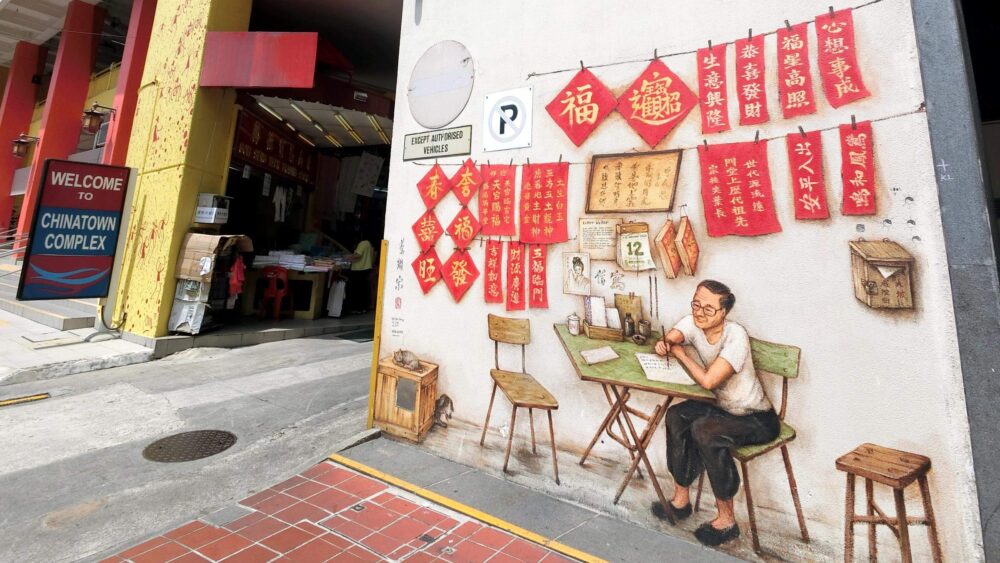
Connectivity: walkable to downtown, well-connected by MRT and bus
Chinatown was one of the earliest neighbourhoods to develop in Singapore’s early days, on the southern bank of the Singapore River, housing the Chinese immigrants who came to work at the docks located near the mouth of the Singapore River. Today it’s integrated into part of Singapore’s Central Business District where multinational companies and tall skyscrapers loom large.
Chinatown is great as a base for your exploration of Singapore because of its proximity to the main sights and its many public transport options. While Chinatown itself has plenty to see and do, you are within walking distance to popular sightseeing districts with Boat Quay along the historic Singapore River and Marina Bay to your north. Other spots like Little India, Clarke Quay, Chinatown, Orchard Road and Bras Basah are a short hop away by MRT (5 out of 6 existing lines pass through this neighbourhood) or by a 10-15 min bus ride.

Where to stay in Chinatown: sub districts and hotel recommendations
Because of its proximity to attractions and higher rentals from being in the Central Business District, the accommodation options in Chinatown tend to be more expensive compared to other neighbourhoods, but there are plenty of options for all budgets, depending on which area you pick.
Kreta Ayer: Very convenient, quite busy
The Kreta Ayer area near Chinatown MRT Station and Pagoda Street is the heart of the district and its most touristy if you don’t mind being amidst the hustle and bustle. You’ll mostly find budget hotels, hostels and capsule hotels housed in the restored shophouses here – shophouses might be charming but are generally smaller and not as soundproof and luxe as there are some restrictions in modifying these old heritage buildings.
- Bliss Hotel – Boutique hotel with simple, clean rooms has an excellent location at the main junction of downtown Chinatown, right across the road from Chinatown Point shopping mall. [on booking.com]
- PARKROYAL COLLECTION Pickering – A stone’s throw from Chinatown MRT Station, staying in this picturesque hotel is like living in fancy hanging gardens. The iconic terraced facade covered in plants is quite stunning both inside and out. Worth a splurge. [on booking.com]
Telok Ayer: Quieter, historic stretch
Wander across South Bridge Road to Telok Ayer Street where the popular Maxwell Food Centre is located. You’ll find a whole row of religious buildings side by side on the former coastline, as well as more shophouses housing a mix of restaurants and bars along Ann Siang Hill. Boat Quay and the Singapore River is a short walk from here. I’d recommend the Telok Ayer area if you want somewhere quieter than Kreta Ayer.
- The Clan Hotel – Luxurious rooms with elegant Chinese touches 30 floors above the squat shophouses of Telok Ayer. The infinity pool is an excellent spot for city views and to cool down after exploring the neighbourhood on a customised tour for guests. [on booking.com]
- Amoy Hotel – Cute boutique hotel with rooms in shophouses and an entrance that connects to the back of the Fuk Tak Chi Temple. [on booking.com]
Tanjong Pagar: More modern and business-like
A little further afield, you’ll see a lot more skyscrapers and office workers at the Tanjong Pagar area which links to the Central Business District. The shophouses along Tanjong Pagar Road are an odd mix of the most authentic Korean restaurants and wedding boutiques, alongside a small housing public estate for a hint of local living. This area is a bit more modern and where some of the nicer hotels are located.
The more expensive contemporary luxe hotels are found on the edges of the Chinatown district, blended into office spaces in the skyscrapers of the Central Business District and Tanjong Pagar. Best for those who want a hotel with modern amenities like a rooftop pool and gym, soaring views from up high and elevators for accessibility.
- Mondrian Singapore Duxton – Comfortable suites at the edge of Tanjong Pagar with a bird’s eye view of Chinatown and the surrounding downtown area. The rooftop pool and bar are picturesque hang out spots. [on booking.com]
- Oasia Hotel – Great location close to Tanjong Pagar MRT Station, and a very eye-catching red architecture covered with plants. Splurge on the Club rooms for exclusive lounge and infinity pool access. [on booking.com]
Bukit Pasoh: Hipper more indie vibes
Bukit Pasoh meanwhile is the quietest of the areas for those who don’t mind more of a walk to see the sights. It does have its own cool with Keong Saik Road, touted as one of the hippest streets in the world with more little boutiques and eateries in the shophouses here. Other hip areas a short walk away include Tiong Bahru, Everton Road and Pearl’s Hill Terrace.

Little India
Little India is another very popular area that my indie traveller friends, particularly the backpacker crowd, like to stay at. While it is one of Singapore’s main ethnic heritage districts and tourist destinations, it’s also a residential neighbourhood and weekend hotspot for the transient South Asian workers in manual labour and construction industries, so prices for accommodation, food and daily needs are generally cheaper compared to the downtown districts.
Little India’s appeal is less about its historical attractions, and more about its melting pot of people and cultures.

Neighbourhood vibes: colourful, vibrant, bustling
Little India’s history is quite unusual as it wasn’t the original Indian district during early British town planning. In fact, it was only was named Little India officially in the 1980s, when the tourism board needed a name to market the district.
There are some landmarks of note here – the Sri Veeramakaliman Temple is the most prominent of the religious buildings with a prime location along Serangoon Road and its colourful entrance tower. Tekka Market and Food Centre in the centre of the public housing estate are bustling with people all times of the day – I feel that Little India is best explored in the mornings when the shops, restaurants and temples are abuzz, but the night owls can always count on Mustafa Centre, a 24-hour shopping centre, for some midnight adventures.
Singapore is often described as well-ordered and very clean, but here amidst the poky shophouse alleys and the sheer crowds of people milling along the road on weekend nights, it feels like you’re a peek into a less curated side of Singapore.
Little India has to be experienced with all your senses, vibrant bursts of spices and cacophony, and feels both local and foreign all at once. The retail mix here represents the Indian culture of past and present – gold shops, flower garland stands and sari boutiques alongside dollar shops, thosai eateries and cheap handphone repair services.
Take note of important Indian festival dates if you’re planning to stay around Little India. The entire length of Serangoon Road is decked out with lights and decorations around the spring harvest festival Pongal and Deepavali, festival of lights. Around this time, festive night markets spring up along the pedestrianised Campbell Lane and the open space at Birch Road – something to note if you prefer quieter surroundings.

Connectivity: Edge of downtown but conveniently linked
The district lies a little further north from the downtown area. The main thoroughfares that cut through Little India are some of the country’s oldest existing roads – Jalan Besar and Serangoon Road – and lead you straight to the Bras Basah and Orchard areas in just 10 minutes if you’re taking public bus or a rideshare car.
On the MRT front, Little India is connected on the Northeast Line so Chinatown and Clarke Quay are just a few stops away, while the Downtown Line offers direct connection to Bras Basah, Fort Canning and Marina Bay. Bras Basah and Kampong Gelam are also within walking distance from the Bukit Timah Road end of the district.

Where to stay in Little India: sub-districts and hotel recommendations
Being a little outside of the downtown area means cheaper prices across the board for accommodation, but consider how you plan to explore Singapore when deciding where to base yourself in Little India. There are no specific sub-districts, but based on the closest MRT stations and main roads:
Around Little India MRT Station
For those on a budget and intending to walk a lot, rooms in the sub-district around Little India MRT Station and Bukit Timah Road put you in the midst of Little India’s main attractions and a short walk from neighbouring Bras Basah and Kampong Gelam districts. There are plenty of hostels and cheap serviceable hotels in the shophouses here if you don’t mind the squeeze.
Around Farrer Park MRT Station
If you’re willing to pay a little more for comfort and don’t mind being further from the sights, look around the Farrer Park MRT Station and Kitchener Road area. It’s not as close to the downtown area, but there’s a little more room for stylish decor and nicer amenities in the boutique hotels and service apartments here, housed in modern commercial buildings.
- The Serangoon House Little India – Located near Farrer Park MRT, with opulent room decor and gilded four-poster beds inspired by Indian colonial architecture with inhouse restaurant GUPSHUP run by a celebrity Indian chef. [on booking.com]
- One Farrer Hotel – A hotel with many different types of rooms from simple studio rooms to lavish sky villas and suites. The highlights are its lounge and olympic size rooftop pool 18 floors up. [on booking.com]

Kampong Gelam
Another cool neighbourhood you can stay in is the Malay heritage area known as Kampong Gelam (sometimes spelt Kampong Glam). I’m personally fond of this neighbourhood because my first office job was located here, and back then it had underground, indie vibes as it was generally not so visited as it was a bit of a walk to the MRT. These days it’s become more convenient, and while it has gentrified, it still has a cool vibe.

Neighbourhood vibes: Hipster and gentrified
Kampong Gelam is the heritage home of the indigenous Malay people – back in the early years when the British came here, it was where the local ruler or Sultan set up his palace (known as the Istana) and the early Malay villages. Despite being so far inland today, the southern end of Beach Road was where the original coastline was – the area got its name which translates as Gelam Village from the Gelam tree, once abundant here and used for boat making.
The district is centered around the beautiful Sultan Mosque with its golden onion-shaped domes, built right next to the Sultan’s Istana, which is less a fancy palace and more a colonial-style bungalow that’s now become the Malay Heritage Centre.
Haji Lane is where the cool boutiques, photo booth studios, restaurants and bars are located – I used to spend a lot of time here, and it’s definitely quite gentrified now but it’s still quite buzzy and colourful. Haji Lane and nearby Baghdad Street are pedestrianised on weekends so there’s more vibes then. You’ll find lots of Middle Eastern cuisine around the area as well.
The main Kampong Gelam area is a more commercial district with conserved shophouses – the public housing around this area is located further away towards Lavender MRT so you won’t necessarily get locals milling around doing their own thing on an everyday basis like in Chinatown and Little India where the public housing is an integral part of the district.

Connectivity: Outskirts of downtown, close to Kallang
Of the three ethnic heritage districts in Singapore, Kampong Gelam is the only one where there is no MRT station that directly connects to the main conserved area, the closest station is about 5-10mins walk away. However, there are now 3 different MRT lines that connect around the district – Bugis is on the green East-West Line for those coming from the airport, and the Downtown Line is great for sightseeing nearby, as is the Nicoll Highway station on the yellow Circle Line.
I’d probably use a lot more of public buses to get around to save on walking – Bras Basah, the Quays, Chinatown and Little India are all within a 10min bus ride. Otherwise, Bras Basah Bugis is close enough to stroll to.
Currently there is a lot of road construction around Ophir Road as the new underground North-South Highway is being built, so expect some diversions and messiness until it is completed in 2029.
Concert goers headed to the National Stadium or Indoor Stadium at Kallang – this area is within walking distance from the Kallang area if you don’t mind a bit of a stroll, or you could hop 1 MRT station from Stadium to Nicoll Highway.
Kampong Gelam is also not a bad spot if you are planning to connect to Malaysia on your trip. Taking the public bus into Johor Bahru for a day trip happens at the Queen Street Bus Terminal, a 5-10min towards the north of Kampong Gelam, wedged between the Little India district. Nearby, Bugis MRT and Golden Mile Complex along Beach Road are also popular pick up points for coaches heading towards other Malaysian spots like Malacca.
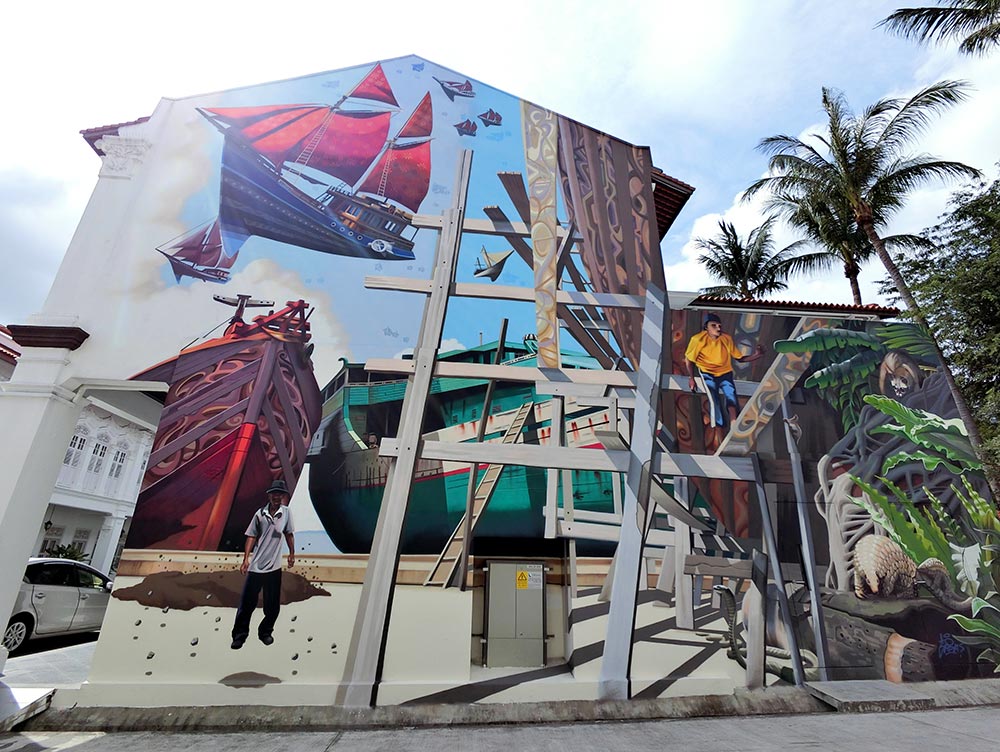
Where to stay in Kampong Gelam: hotel recommendations
Around Rochor Road
The accommodation options here range from hostels and boutique hotels in the conserved shophouses, to newer, more luxe properties in newer buildings towards the Rochor Road side, which is also more walkable to the downtown area.
- Village Hotel Bugis – Rooms here are a bit more spacious than some of the shophouse boutique hotel rooms if you don’t mind decor that’s a little dated. Convenient location along Victoria Street a short walk away from the Bugis shopping centres. [on booking.com]
- Coliwoo Hotel Kampong Glam – Cosy rooms in a shophouse unit along Arab Street amidst cloth and carpet traders, right next door to Haji Lane. This co-living space houses both short term visitors and longer-term guests. [on booking.com]
- Pan Pacific Serviced Suites Beach Road – This elegant and modern property has serviced apartments and sophisticated suites, with a great location close to the MRT and amenities along Beach Road. The rooftop infinity pool facing Marina Bay has the best views. Sister property PARKROYAL on Beach Road is right next door. [on booking.com]
- Andaz Singapore – Splurge on luxury rooms and suites with soaring views high above the ethnic quarter in the new Duo complex, conveniently atop Bugis MRT station. Cap your nights off at the inhouse rooftop bar 39 stories high, Mr Stork. [on booking.com]
Around Jalan Sultan
For a little more quiet, pick a hotel nearer the Jalan Sultan side. This area on the edge of the Lavender public housing area generally sees less tourists, and you are closer to a local favourite foodie hangout, Golden Mile Food Centre. For street art lovers, Aliwal Arts Centre and Sultan Gate Arts Village are where you’ll find lots of wall murals around the buildings and maybe run into a street artist at work.
- The Sultan Heritage Hotel – Beautiful refurbished boutique hotel in a heritage shophouse row along Jalan Sultan, a quieter corner that’s still within walking distance of the main sights. Offering a range of single rooms to lofts, each room is unique. [on booking.com]

Boat Quay / Clarke Quay
Marina Bay may be the new face of Singapore, but before it shot to prominence when unveiled in 2010, the Quays along the Singapore River were the buzziest locales in the downtown area from its historical beginnings as the heart of entrepot trade, to modern times as converted nightlife areas, in the heart of the Central Business District of Singapore.
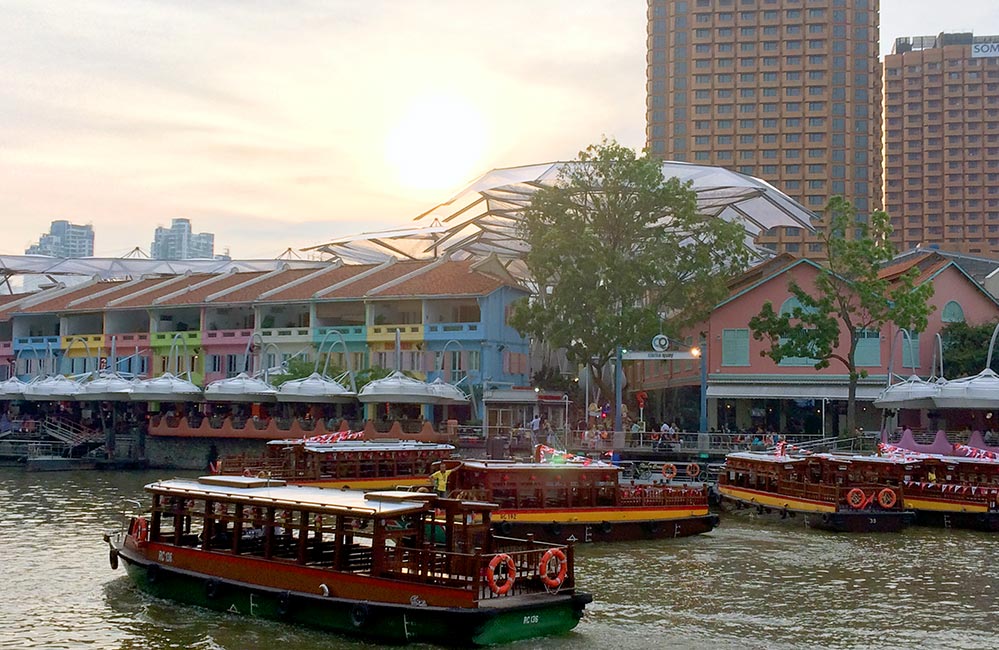
Neighbourhood vibes: Business by day, party by night
The Singapore River remains the heart of Singapore’s downtown district even today. After entrepot trade shifted away and the coastline pushed further back, the market place and British administration area along the banks of the river became the Central Business District and Civic District respectively, while the quays were converted into nightlife and entertainment districts, the shophouses and warehouses becoming restaurants and night clubs instead.
The quaint shophouses of the quays are dwarfed by some of Singapore’s tallest buildings nearby. By day you’ll find a mix of office workers bustling around between buildings and having lunch, alongside the tourists exploring the sights of the area. By night you’ll get the dinner crowd emerging for al fresco dining as the city cools, with the river boats ferrying passengers along its length. The music gets louder as the restaurants and bars beckon the crowds to enter.
This area might not the place to be if you are looking for some peace and quiet at night because of the nightlife. Also because of the office workers, there might not be as many amenities like restaurants and conveniences in the day on weekends when most offices are closed. On weekdays you definitely will want to avoid peak lunch (12-130pm) and dinner timings (7-8pm) if you plan to eat around here as well.

Connectivity: right in the heart of downtown
I like this district for its sheer convenience in the heart of downtown and its walkability to the major historical sights of the Civic District, and even Marina Bay, Chinatown or the Bras Basah district if you’re up to it. Very good for those who plan to walk along while sightseeing.
On the public transport front, Raffles Place MRT Station on the North-south and East-West MRT lines are very convenient ways to get to most of Singapore, with the East-West line connecting you to Changi Airport. Clarke Quay Station on the Northeast line is great to get you to Chinatown and Little India. Fort Canning Station on the Downtown line is also not too far a walk from Clarke Quay. There are many bus connections as well to help you navigate the district.
You could take the Singapore River Cruise on a bum boat that looks like the old lighter boats that used to carry goods along the river, but now ferry tourists around instead. The cruise starts from Clarke Quay and takes you around Marina Bay to enjoy the scenery without walking (best at sunset or evening!).

Where to stay in Boat Quay & Clarke Quay: recommendations
While the hotels in general are not as luxurious compared to the newer Marina Bay area, they are more budget friendly, ideal if you’re a traveller who just needs a decent room at the end of a long day of exploring and prefers convenience to fancy rooms, but there are some nice modern options here as well.
There are 3 main quays along the Singapore River:
Boat Quay
Boat Quay right at the mouth of the river has kept its rows of shophouse warehouses, now transformed into alfresco dining and poky little bars frequented by the office workers around the area. The strip right along the river bend has nice river views and lots of beautiful bridges though it is probably the most touristy bit of this area, and Circular Road is pretty popping at night with little bars.
Clarke Quay
Further inland along the river is where Clarke Quay and the bigger warehouses were located, and today is where you’ll find the city’s larger nightclubs and bars. The conserved Clarke Quay area itself doesn’t have hotels – most of the accommodation is located in the conserved shophouses between South Bridge Road and New Bridge Road, between Boat Quay and Clarke Quay MRT station.
- 21 Carpenter – Chic boutique hotel with beautifully designed social spaces and a scenic rooftop infinity pool has a prime location right across the road from Clarke Quay Central Mall. [on booking.com]
- Paradox Singapore – A variety of rooms and suites in this slightly older hotel. Pool and fitness centre on site. Great location right next to Central Mall. [on booking.com]
- Park Regis by Prince Singapore – straddling the border of Chinatown and the Quays, this business hotel offers comfortable rooms, including rooms with pool access. [on booking.com]
There is another area down the river past Clarke Quay called Robertson Quay. It’s much more chill and popular with the expats living in Singapore, but not as conveniently located as the other two quays which are closer to MRT stations. There are some nice hotels there, but I would suggest Robertson Quay only if you plan to have private transport arrangements or don’t mind a lot of walking.

Bras Basah / Bugis
The former European quarter of early Singapore is now the art and heritage district with many museums and galleries around the neighbourhood, as well as some of the country’s oldest religious buildings and former schools housed in conserved colonial architecture. Located between the Civic District area and the Kampong Gelam district, it’s a very convenient area to stay in close to the main sights and very walkable.
Neighbourhood vibes: Artsy and historical
I’m fond of bringing people to the Bras Basah area as it has a little bit of old, new and everything in between. Museum lovers will love the Bras Basah district for its proximity to Singapore’s major cultural institutions, like the National Museum of Singapore and the National Gallery of Singapore. The district sits at the foot of the historic Fort Canning Hill where the Peranakan Museum is located, as well as Singapore’s National Library Building. Plenty of architecture, history and art for the culture lovers around here.
There is a bit of a youthful vibe to this area as the Singapore Management University’s campus is smack-dab along Bras Basah Road, along with several art colleges like LaSalle School of the Arts, Nanyang Academy of Fine Arts (NAFA) and the School of the Arts (SOTA) located here, so despite it being adjacent to the downtown area, you can often find some cheaper, indie alternatives if you look hard enough.
Unlike the 3 major ethnic districts in Singapore, the European quarter doesn’t really exist anymore, save for the fact that you’ll see more conserved colonial-style architecture around this area. The area is largely commercial these days, but you’ll find a pocket of the older public housing districts towards Bugis around Bras Basah Centre, including one of my favourite stretches of Waterloo Street, where you’ll find people going about their daily lives in the housing estate alongside a variety of Singapore’s older religious institutions side by side on a pedestrianised street.

Connectivity: centrally located
Bras Basah is a highly walkable district, connected to Little India, Kampong Gelam, the Civic District and the Quays, so definitely a plus to stay here if you want to be in the center of Singapore’s sights, or just hop on a public bus to save you a bit of walking.
The Downtown (blue) and Circle (yellow) MRT lines have made this district a bit easier to get to, and the major City Hall Interchange on the North-South and East-West Lines a short walk away is also super convenient. The Downtown Line may be a bit of a pain because there is a weird loop in this area, so take note of the direction that you are headed.
A random factoid: because this is the downtown area, all the MRT stations here are not just underground, but they’re particularly deep because they run under some major rivers that have been incorporated into our sewage, so the train stations run underneath these channels!
I think the public buses will definitely be useful for quick hops around the city centre if the heat gets a bit too oppressive.
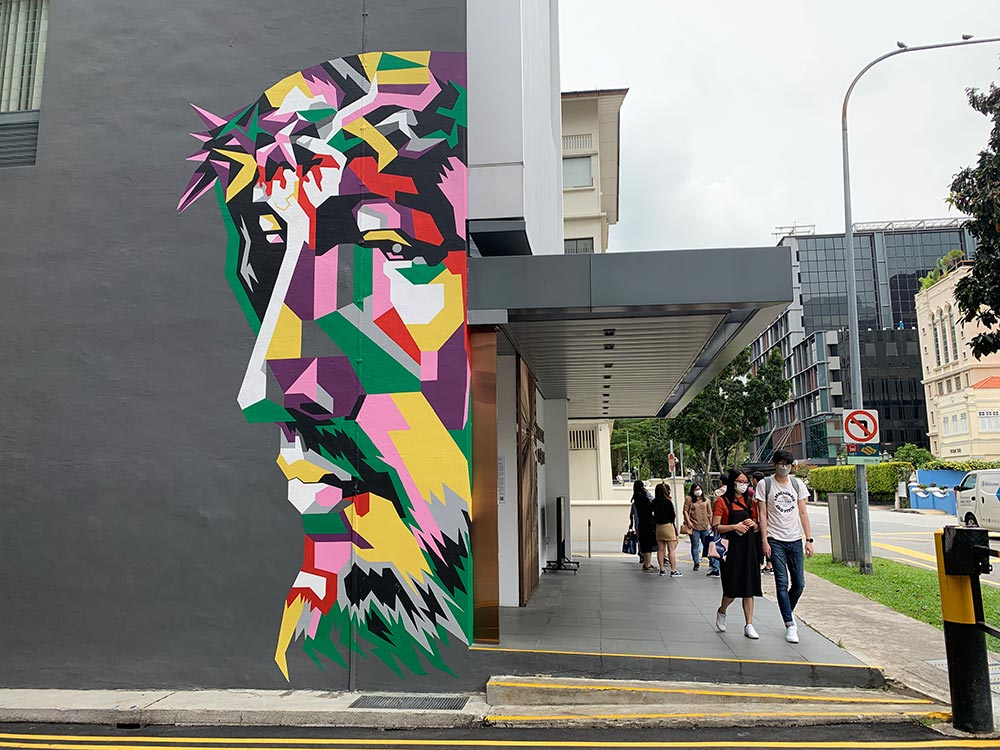
Where to stay in Bras Basah: recommendations
The Bugis-Bras Basah area doesn’t have specific subdistricts, but I’ll break it down in terms of the major landmarks nearby:
Where to stay
The area around Bras Basah and Bencoolen MRT Stations is great for history lovers, at the base of Fort Canning Hill and close to the National Museum of Singapore. It’s also on the tail end of the shopping belt Orchard Road so you get a good mix of old and new around here. You can find some interesting shops and cheaper places to eat around here because of the nearby art schools and university.
A surprising corner of this district is located around Rochor MRT Station, at the junction of Rochor Canal Road and Selegie Road, which is also within walking distance to the main Little India district. A generally quieter area, it’s still quite convenient to get around from here.
- Rendezvous Hotel – Marked by a giant billboard at the junction between Orchard Road and the Bras Basah District, the hotel furnishings may need a little updating but it’s a comfortable and well-situated hotel. [on booking.com]
- Hotel Mi Rochor – Studio to family-sized rooms a short walk away from Bras Basah’s sights but close to Rochor MRT and Little India. [on booking.com] There is another Hotel Mi next to Bencoolen MRT if you prefer a more buzzy location.
Another cluster of hotels can be found between Beach Road and North Bridge Road, which puts you right in the centre of some excellent eateries and bars. The Raffles Hotel is perhaps Singapore’s most renowned hotel (and its priciest), but there are more affordable alternatives nearby housed in a mix of boutique shophouses and swankier skyscrapers. For some local neighbourhood feels, Bras Basah Complex is an old mall filled with many book-related businesses.
- Naumi Hotel – Colourful boutique hotel with well-designed, comfortable rooms close to the Beach Road area. Stunning Civic District views from its rooftop infinity pool. [on booking.com]
- Carlton Hotel – This hotel has an unbeatable location offering nice rooms with city views across the road from CHIJMES, Raffles hotel and Raffles City Shopping Centre where the MRT is located. [on booking.com]
Those who like more modern amenities nearby can opt to stay around the Bugis shopping centres – Bugis Junction and Bugis+ have lots of shops and food, while Bugis Street has cheaper street market type offerings. I personally like the pedestrianised Waterloo Street behind Bugis+ where the temples and Albert Court Food Centre are located. It’s a nice glimpse into local living without having to venture out of the downtown area, and with cheap good food options.
- Ibis Bencoolen – [on booking.com]
- Frasers House, a Luxury Collection Hotel – Formerly known as the Intercontinental Singapore under IHG, this luxury stalwart under new ownership offers premium rooms and is directly connected to Bugis Junction. [on booking.com]

Other neighbourhoods to consider
The neighbourhoods that I’ve recommended above are those that I think have the right balance of convenience and character, and they’re ultimately where I’d suggest you stay. Even so, in case none of them seems like the right fit for you, here are a couple of other options.
A note that I don’t think these areas below are bad – they might prove to be a good fit for you based on your needs, but I wrote this list based on how I would travel and my personal preferences.
Orchard Road
Orchard Road is Singapore’s main shopping belt, a stretch of road lined on either side with shopping malls galore. The best time to be here is in the lead up to Christmas when the road is decked out with lights and the malls are extra festive.
There are lots of nice hotels, high-end boutiques and fancy restaurants here, plus it’s not far from the main downtown area, but Orchard Road doesn’t have much in terms of historical sights and attractions if you like living in a neighbourhood with more character or local life. This area is popular with shopaholics, city slickers, and medical tourists who frequent the private hospitals nearby.
An alternative would be picking hotels in the Novena area – just outside of the Orchard Road Stretch so slightly cheaper, but still quite convenient.

Civic District and Marina Bay
The Civic District and Marina Bay are perfectly located in the downtown area near the main sights, but the main question here is whether you can afford it. What you’ll find here are largely big international chains and luxury hotels, and prices start from at least S$400 per night for most of them. That’s out of my budget which is why I haven’t recommended this area more highly.
The hotels here are especially pricey during festive periods like New Year’s Eve, Singapore’s National Day in August and around the Formula 1 Grand Prix race in the end of September. You can walk to most major attractions and enjoy the best room views, but expect it to be quieter at night as most of the shops close by about 8-9pm.

Sentosa
Sentosa is the city’s resort island and a favourite for local staycationers who want to escape the bustle of the city. I would only recommend staying on the island if you plan to spend a fair amount of time at Resorts World Sentosa’s attractions, want a beachfront view, or have private transport. Commuting from Sentosa to the tourist sites on the mainland everyday will be a real pain by public transport.
Food is also more expensive on the island and food delivery may add a surcharge because of the inconvenience – your best bet is to pop over to Vivocity Shopping Centre across the water for casual dining and groceries. You won’t see local life on Sentosa, though you may see how the richest people in Singapore live if you detour to Sentosa Cove on the eastern shore!

Around Changi Airport
Changi Airport hotels and the surrounding area on the far eastern end of Singapore are really only for visitors with long layovers, those who have very early morning flights to catch or are looking for a truly offbeat locale.
The downtown area is about 20-30mins by taxi from the airport (1-1.5hrs by public transport) so while it’s not far, it’s not the most convenient way to see the sights. The hotels in Changi and the nearby Changi Village area are fairly isolated so you won’t have many amenities like food and shopping close by outside the airport.
Interestingly enough, I’ve done a number of staycations here in the past:

Looking for more about Singapore? Check out all my Singapore posts or some recent posts here: