
There is a subtle cultural shift underway in Singapore, one that reveals itself not in grand gestures, but in how the city is increasingly experienced. People are walking more. Lingering longer. Choosing routes for atmosphere rather than efficiency. Spaces once passed through quickly are now being occupied, explored, absorbed.
This is not accidental, it reflects a broader rethinking of how cities should feel as well as function in 2026, and how design can shape the everyday experience for us all.
Globally, architects and urban thinkers describe this moment as a turn toward ‘biophilic design’, an approach that places human movement, sensory richness and connection to nature at the centre of urban life. What was once a theoretical framework is now ready to become a living condition in cities where ideas are finally meeting expectation.
In Singapore particularly, this shift is happening and it’s happening right now – ahead of the curve.

From rooftop farms and forest-fringed pools 40 floors up, buildings are increasingly designed to behave more like landscapes than towers – delivering on a promise for new generations of travellers and urbanites who want the best of both worlds: outdoor life without ever having to leave the city.
Rather than treating nature as simply an aesthetic layer applied over the top of buildings and public space, the city’s newly discovered design language is all about continuity. Architecture, landscape and infrastructure are being composed as a single experience – one that unfolds gradually, rewarding attention rather than demanding it, a move away from simple spectacle and towards urban wellbeing immersion.
This can be felt, as well as seen, in how the city is to be navigated. At the halfway point of Singapore’s Green Plan 2030, the effects of this paradoxically subtle-yet-seismic approach to urban living is finally manifesting itself on the streets. Formerly discrete green spaces are now linked by shaded routes and elevated paths, encouraging slower, more intuitive movement. The experience is less about arriving at a destination than about what happens in between – the changes in light, texture, planting and sound that mark transitions from one neighbourhood to the next.
Contemporary urban designers often describe this as designing for flow, and it is increasingly central to Singapore’s identity. Projects conceived years ago are, in 2026, being stitched together, to create a city that can be read on foot, at eye level, in real time.
According to recent analysis from Arup’s Cities Alive programme, this modernist type of human-scaled, walkable urbanism has become one of the defining design priorities of our time, particularly in dense, globally connected cities.
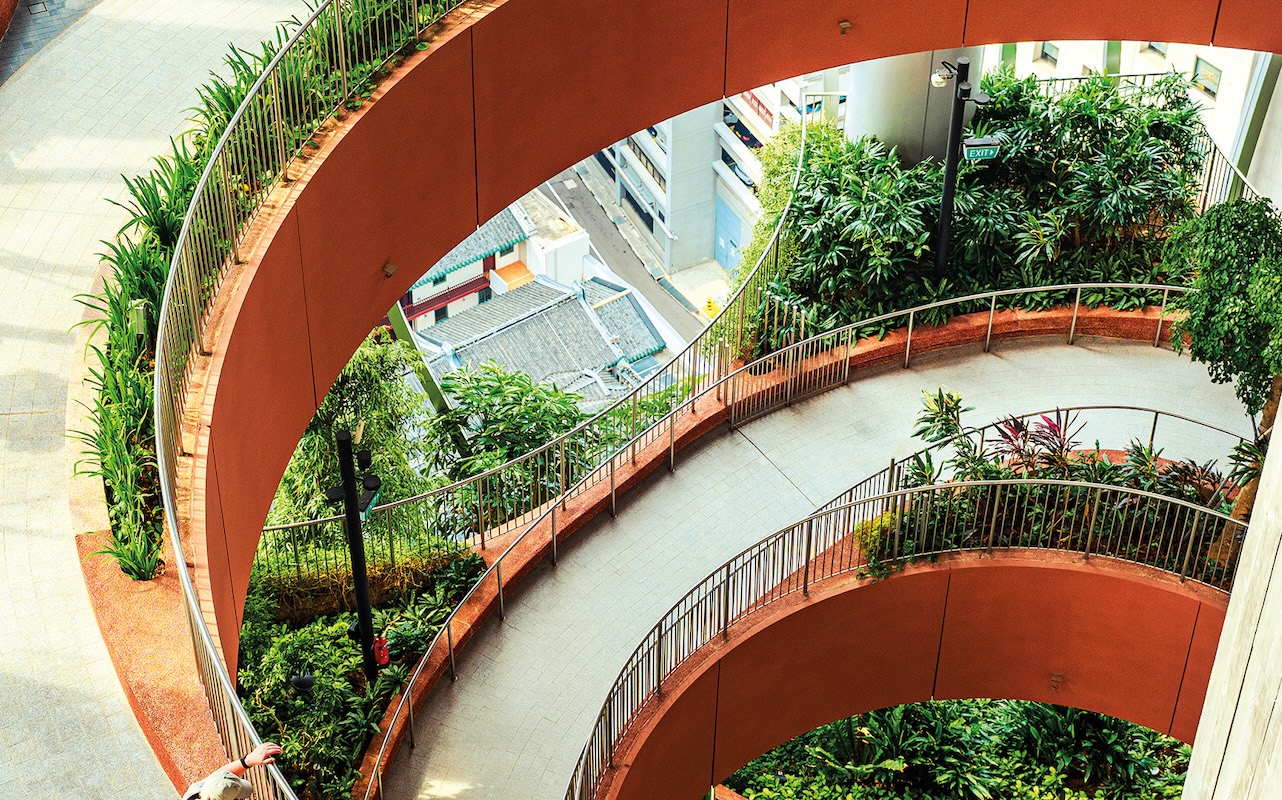
The practical impact of this is not difficult to discern. In late 2024, two Singapore towers took top global high-rise awards for the same underlying reason: they turn vertical density into practical, usable habitat.
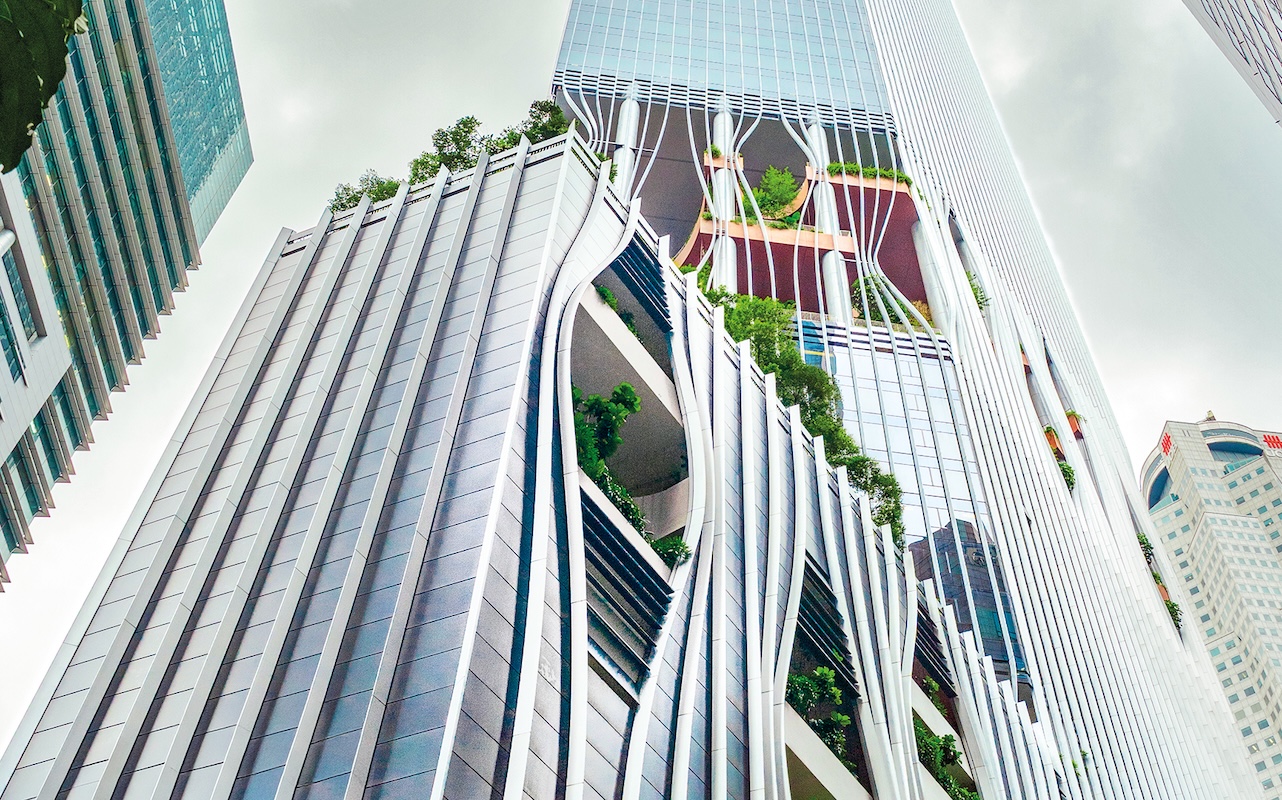
When CapitaSpring won the 2024/25 International High-Rise Award in November, the jury highlighted that more than 80,000 plants are integrated into a single building, creating a green plot ratio of 140 per cent – equivalent to the entire site being returned as green space, just stacked skyward. It is intelligent design upending the usual urban trade-off.
In many cities, density and greenery exist in tension. Here, a different equation is taking hold. In land-scarce environments, the most generous greenery of the future needs to sit inside towers, not beside them.
Of course, buildings alone do not explain why Singapore’s 2026 outdoor aesthetic is durable rather than fleeting. These projects connect into a coherent, citywide system.
Singapore’s Park Connector Network now stretches across more than 380 kilometres, with new links continuing to close long-standing gaps between neighbourhoods. The scale change is decisive.
Nature shifts from something deliberately visited to something simply encountered as part of daily life. The outdoors stops being an interlude and starts becoming infrastructure.
Central perks
This subtle but substantial design ethos delivers a new rhythm of living. For residents, personal wellness no longer needs to be scheduled or curated; a lunchtime loop becomes an easy default. For visitors, a stopover can now include genuinely restorative outdoor experiences without leaving central districts or committing to a full-day excursion.
Nature here is treated not as luxury or escape, but as essential urban fabric – a model now being studied by planners in cities from Hong Kong to Tokyo as a working reference.
Behind this visible transformation are policies that ensure the programme continues well beyond 2026. Seeing Singapore now, just halfway through its Green Plan 2030, already feels complete – and clearly unfinished. Targets for new and enhanced parkland, alongside the ambition to plant one million additional trees by 2030, reflect a cultural and economic decision that cities can increasingly compete on quality of life and wellbeing, as much as on infrastructure and connectivity.
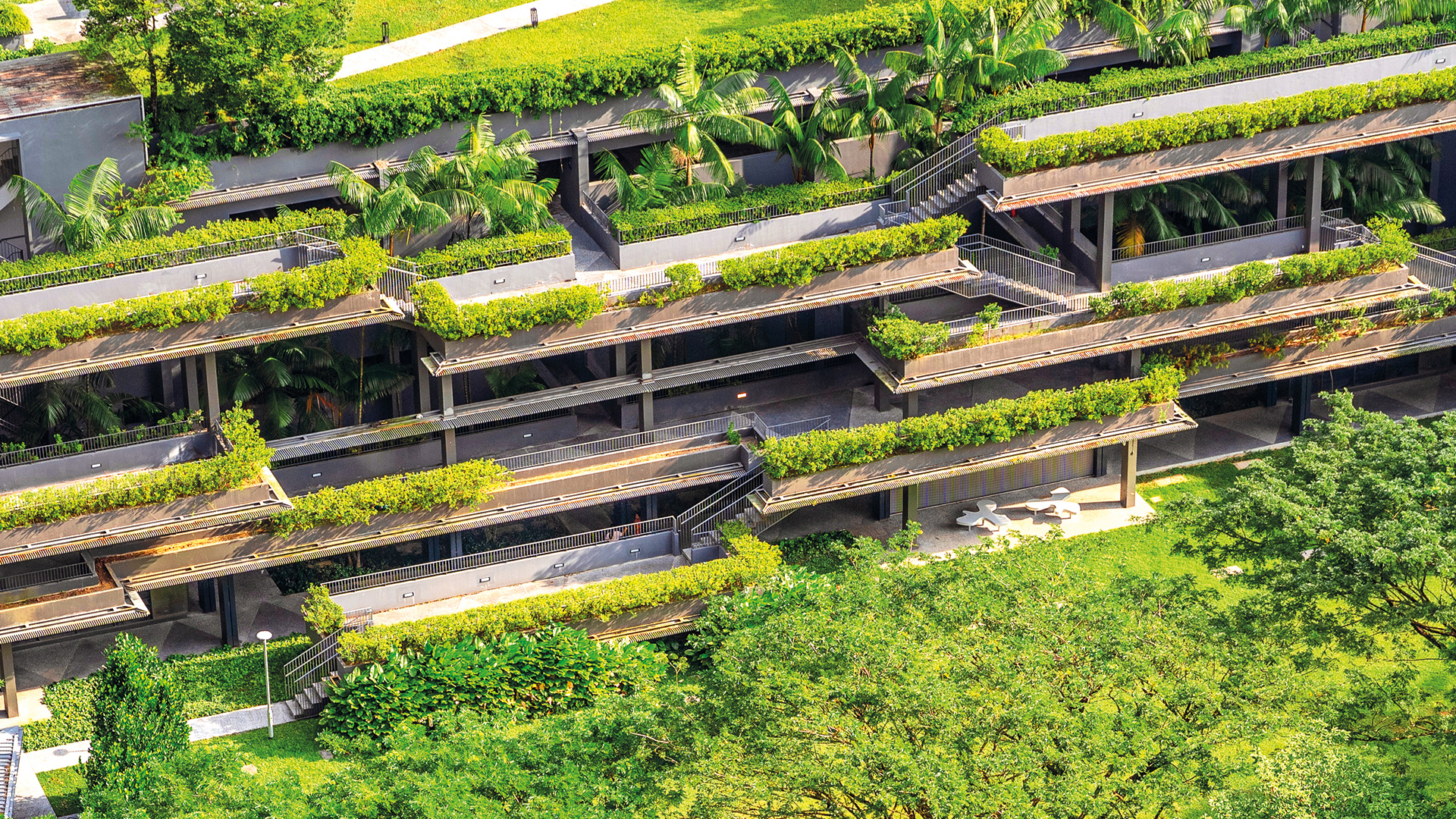
The same thinking plays out at larger scales, where landscape increasingly sets the logic for development rather than decorating it.
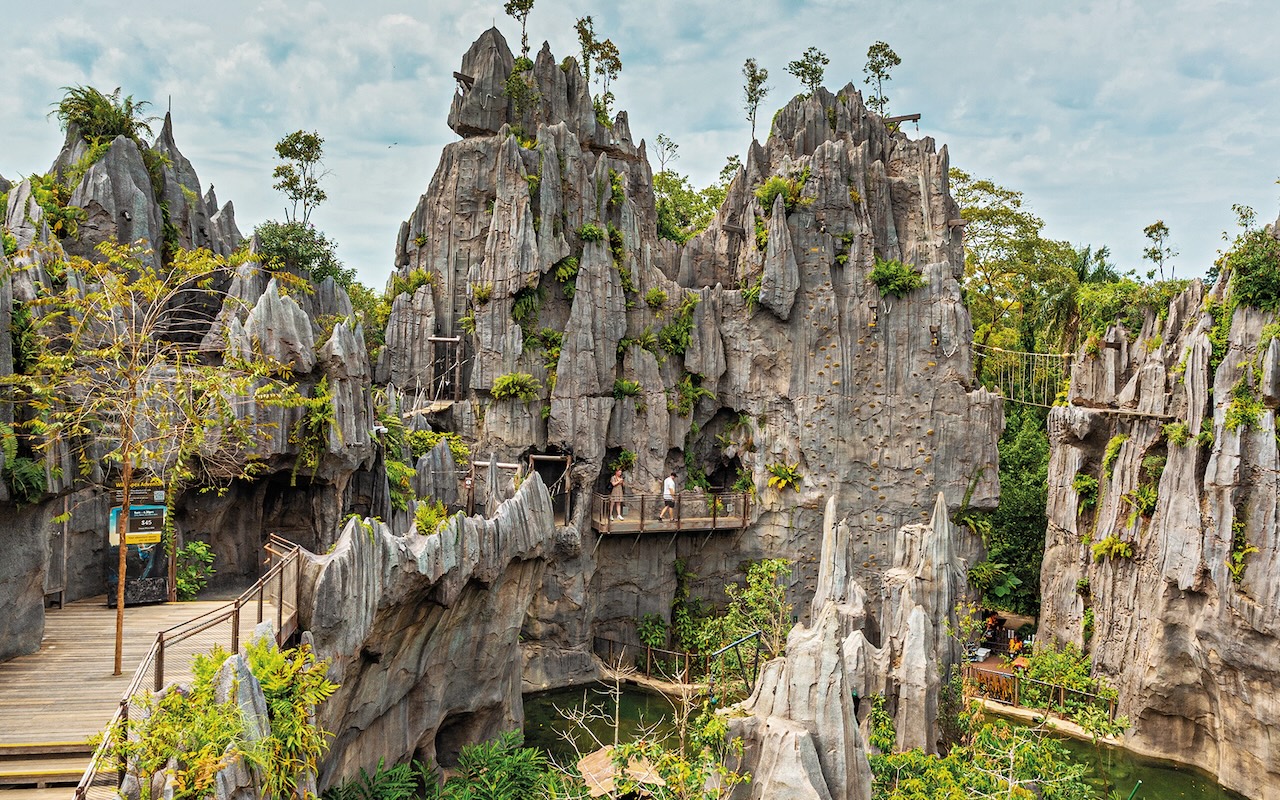
In the north of the island, destinations such as Mandai Wildlife Reserve demonstrate how visitor experiences can be organised around terrain, planting and movement rather than attractions. Newer elements, including elevated walkways and open-air structures, are designed to be traversed slowly, allowing architecture to recede and environment to take the lead.
Mandai Rainforest Resort, opened in April 2025, lifts, rooms and walkways into the canopy. Private balconies are fitted with bladeless fans that blend quietly into the forest soundscape, offering views across reservoir water and dense greenery, with the city present but never intrusive.
It represents a new category of urban nature stay, collapsing the traditional distance between city hotel and nature lodge – all within half an hour of Changi Airport.
Nothing stands still. Singapore will look and feel different again in just a year or two. What’s visible now is not stasis, but evolution – a city refining its identity in real time.
A growth industry
What makes these places resonate so much for 2026 is not novelty, but timing. Across the entire city scape, we are witnessing the next generation of architects, planners and designers all working with a newly shared set of sensibilities; restraint over excess, tactility over image, and atmosphere over iconography.
Hospitality, residential and civic spaces are increasingly shaped by the same principles, blurring traditional juxtapositions between public and private, indoor and outdoor, designed and grown.
Now more than ever, Singapore is reflective of a wider cultural appetite. Recent design research from McKinsey Design points to a growing preference for cities that feel ‘emotionally navigable’ – places where people can orient themselves through experience rather than signage, and where urban life supports moments of calm as readily as moments of intensity.
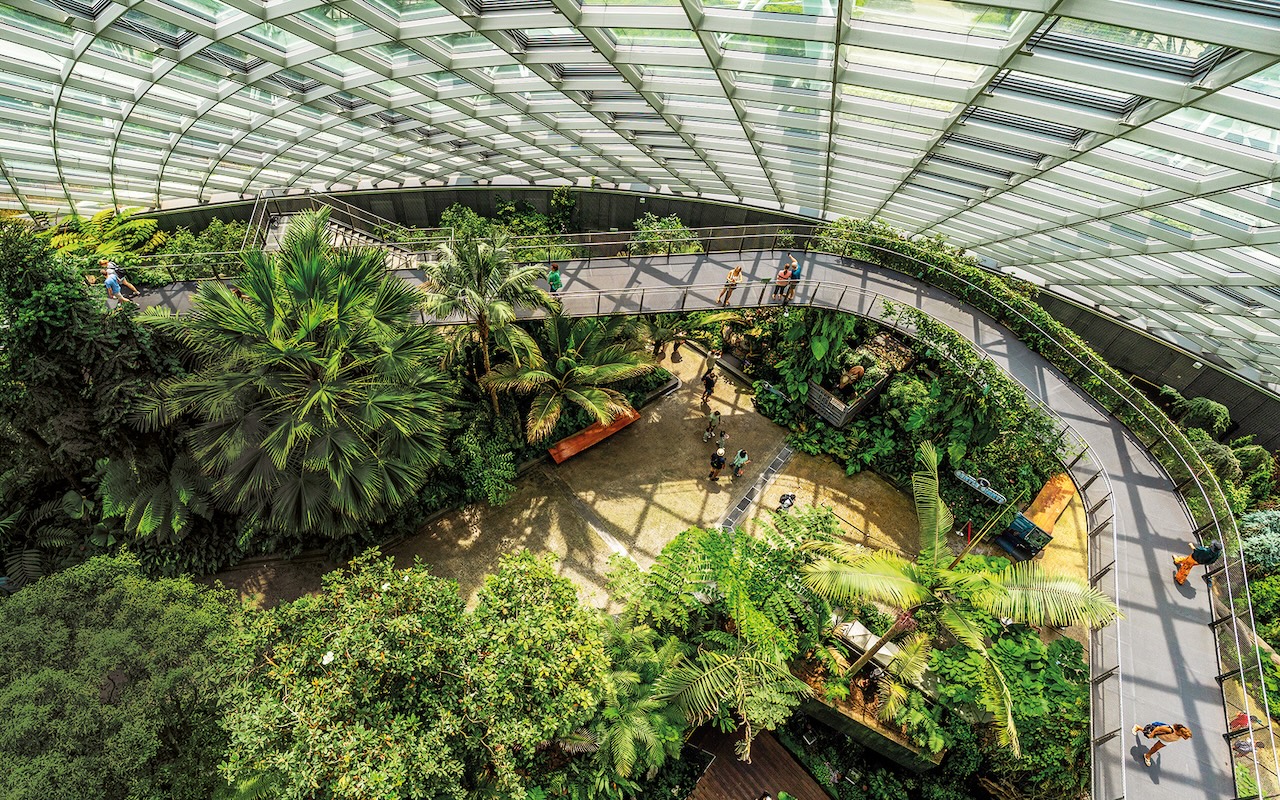
Singapore’s 2026 design moment sits squarely within that movement. Many of the city’s most thoughtful spaces are not new in isolation, but newly coherent – part of a wider, shared language that has matured into confidence.
The emphasis is no longer on proving an idea, but on refining it. For visitors and locals alike, this creates a different way of encountering the city. Singapore reveals itself less as a collection of well-known landmarks and more as a sequence of experiences, shaped by rhythm, shade, material and movement. It is increasingly a city designed not just to be seen, but to be felt, and to, almost literally, grow with you over time.
As this cultural and design sensibility continues to settle into the fabric of daily life, Singapore feels uniquely aligned with the global mood; not chasing trends, but adopting them organically, whilst quietly setting its own pace.
Around the world, cities talk about liveability, wellbeing and resilience. Singapore has moved beyond discussion and into daily use – and the momentum is accelerating.
The outdoors here is no longer simply aspirational. It is operational, embedded and improving year on year. In 2026, Singapore feels like a city designed to breathe, and increasingly, to invite others to slow down and do the same, wherever you might be within it.
For more information on Singapore Airlines’ flights to Singapore, visit singaporeair.com.